
Best Blinds for Kelowna's Hot, Sunny Summers

Andor's Blinds
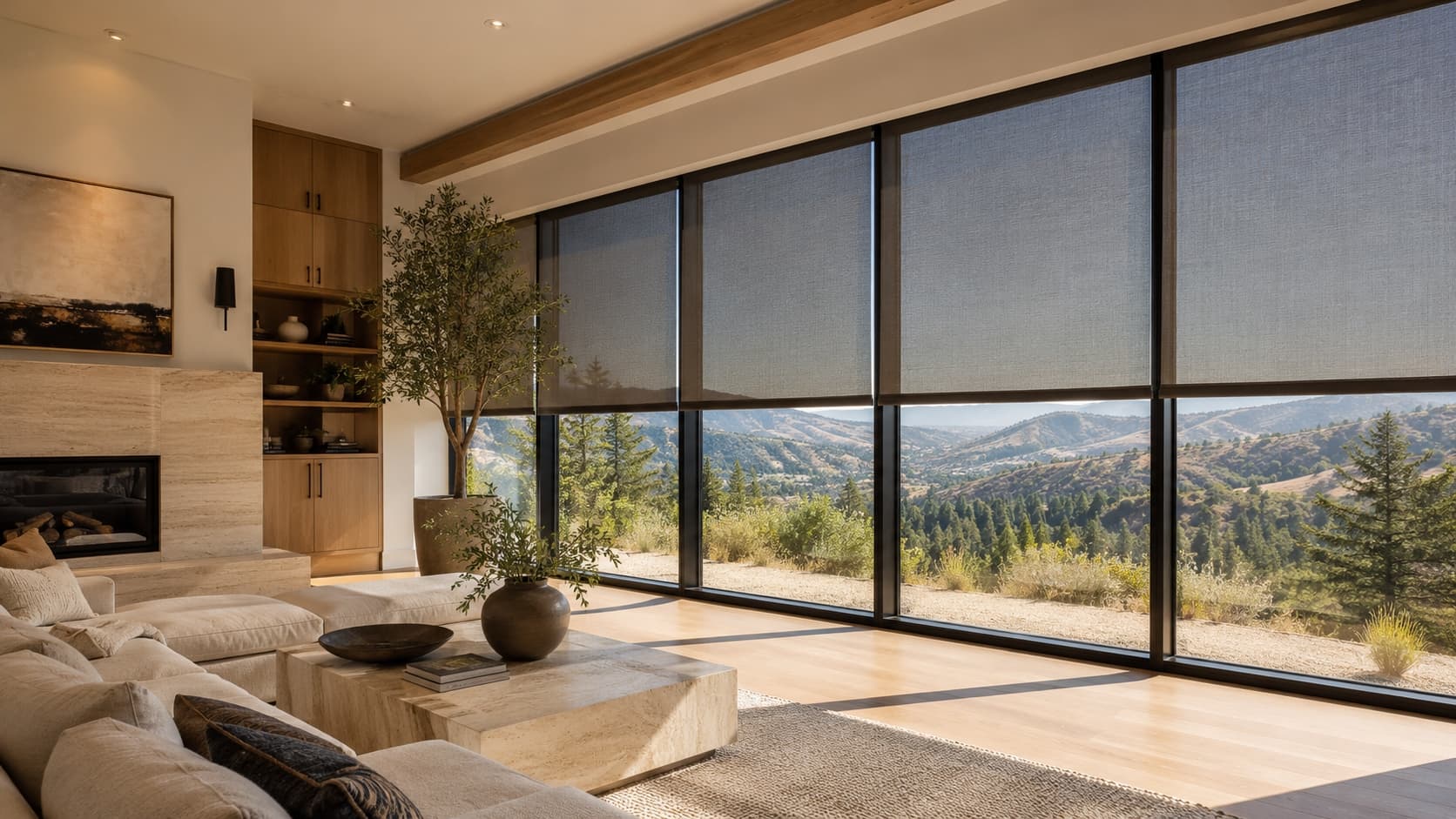
If your living room turns into a greenhouse by mid-afternoon every July, you already know the problem. Kelowna gets more sun than almost anywhere in Canada, and all that beautiful light comes with real heat, hard glare, and slow, steady fading of everything it touches. The right window coverings are the simplest, cheapest fix — often more effective than turning the air conditioning up another notch.
This guide walks through which blinds and shades actually keep an Okanagan home cooler, why they work, and how to match them to each room.
Why Kelowna homes overheat in summer
Kelowna sits in a semi-arid pocket of the Okanagan Valley and racks up over 2,000 hours of sunshine a year. Summer highs commonly land in the high 20s to mid-30s, and heatwaves can push past 38 °C. The air is dry, so the heat is more comfortable than a humid Ontario summer — but the sun load on your windows is intense, and it lasts for hours.
A few local factors make it worse:
- Long days. Around the solstice you can get roughly 16 hours of daylight, so windows are absorbing sun from early morning to late evening.
- West-facing rooms. The low, late-afternoon sun pours straight in at eye level, which is the worst angle for both heat and glare. Lake-facing homes get an extra dose of reflected light off the water.
- Big windows. Many Okanagan homes are built to capture the view, which also means more glass for the sun to come through.
Once sunlight passes through the glass and hits your floors and furniture, that energy turns into heat your air conditioner then has to fight. Stopping the sun at the window is what makes the difference.
How window coverings actually reduce heat
It helps to know the basic mechanism, because it explains why some shades work better than others.
Most of the heat comes from solar radiation passing through the glass. A window covering reduces that in two ways: by reflecting and absorbing sunlight before it enters the room, and by adding a layer of insulation that slows heat moving through the window. A few principles follow from that:
- Lighter, reflective colours bounce more sunlight back out than dark ones, so they tend to keep a room cooler.
- Tighter weaves and insulating constructions block more heat than open, sheer fabrics — but they also block more of your view, which is the trade-off.
- The earlier in the day you close them on a sun-facing window, the better. Shades stop heat from building up in the first place; they can't remove heat that's already in the room.
The best blinds and shades for heat and UV
Cellular (honeycomb) shades — best all-round insulation
Cellular shades are built with honeycomb-shaped pockets that trap a layer of air between the room and the window. That trapped air is what makes them the strongest insulator of the common shade types — it slows heat coming in during summer and heat escaping during our cold, dry winters, so the benefit runs in both directions. If your goal is comfort and energy efficiency in a hot west- or south-facing room, this is usually the first option to look at. Double-cell versions insulate a little more than single-cell.
Solar (sunscreen) roller shades — best for keeping the view
Solar shades are roller shades made from a screen-like fabric designed specifically to cut heat, glare, and UV while you can still see outside. They're rated by an openness factor — typically around 1%, 3%, 5%, or 10% — which is the percentage of the weave that's open. A lower number (like 1–3%) blocks more sun and gives more privacy; a higher number (5–10%) preserves more of the view but lets more light through. For a lake-view living room where you don't want to lose the scenery, a low-openness solar shade is often the sweet spot.
Zebra (dual) shades — best for flexible light control
Zebra shades alternate sheer and solid horizontal bands, so you can slide them to let in soft filtered light or line up the solid bands to block the sun and add privacy. They won't insulate like a cellular shade, but they're excellent in rooms where the light changes through the day and you want to adjust on the fly — which describes a lot of Okanagan living spaces. For a closer look at how they stack up against the other roller-style option, see Zebra Blinds vs Roller Shades.
Blackout shades — best for deep shade and sleep
When you need a room genuinely dark and cool — a bedroom, a nursery, a media room — blackout fabrics block essentially all the light. Paired with a cellular construction, they also help hold the temperature. The thing to know is that "blackout" refers to the fabric; a standard roller still leaves thin gaps of light at the sides, so if total darkness matters, ask about side channels.
Matching the blind to the room and window
The right choice depends as much on the window's orientation as on the room itself.
| Room / situation | The challenge | A good starting point |
|---|---|---|
| West-facing living room | Harsh late-day heat & glare | Low-openness solar shade or cellular shade |
| Lake-view room | Heat & glare, but you want the view | Low-openness solar (sunscreen) shade |
| Bedroom | Sleep + heat + early sunrise | Blackout cellular or blackout roller with side channels |
| South-facing room | All-day sun load | Cellular shade for insulation |
| Kitchen | Heat + moisture + easy cleaning | Light-filtering roller or faux-wood blind |
| High or hard-to-reach windows | Hot, awkward to operate | Motorized cellular or solar shade |
For tall feature windows you can't easily reach, motorized shades let you schedule them to close before the afternoon heat builds — genuinely useful in a great room with a two-storey wall of glass.
A bonus benefit: protecting floors and furniture
Kelowna's UV load doesn't just heat your home — over time it fades hardwood floors, rugs, artwork, and upholstery. Solar shades and UV-rated fabrics block a large share of that ultraviolet light while you keep the view, which quietly protects the things in the room. If you've ever noticed a sun-bleached strip on a floor where the afternoon light lands, that's the damage these shades are designed to prevent.
Mistakes to avoid
- Choosing a dark, heavy fabric for a hot room without considering it. Dark colours can look great but tend to absorb more heat — worth weighing against lighter, reflective options.
- Picking a high-openness solar shade for a west window and being surprised it still lets glare through late in the day. Match the openness factor to the orientation.
- Assuming "blackout" means no light at all. Without side channels, light still sneaks in at the edges.
- Forgetting child-safety. If kids or pets are in the home, choose cordless or motorized.
Frequently asked questions
Which blinds block the most heat?
For pure insulation, cellular (honeycomb) shades are usually the strongest of the common types because of the trapped air in their cells. For cutting heat and glare while keeping your view, a low-openness solar shade is the go-to.
Do light-coloured blinds really keep a room cooler?
Generally, yes — lighter, more reflective fabrics bounce more sunlight back outside, while darker fabrics absorb more of it. Colour is one factor among several (fabric type, openness, insulation), so it's best considered alongside the others.
Are motorized blinds worth it just for sun control?
They can be, especially for large or hard-to-reach windows, because you can schedule them to close automatically before the hottest part of the afternoon. For lower, easy-to-reach windows it's more of a convenience than a necessity.
Will the right shades lower my cooling costs?
They reduce how much heat your home takes on through the windows, which eases the load on your air conditioning. The size of the benefit depends on your windows, orientation, and the product — which is exactly the kind of thing we can assess in person.
Beat the Okanagan heat before summer hits.
Book a free in-home consultation and we'll look at your actual windows, sun exposure, and rooms, then recommend the right shades — with samples in hand and no pressure.
More articles
All articles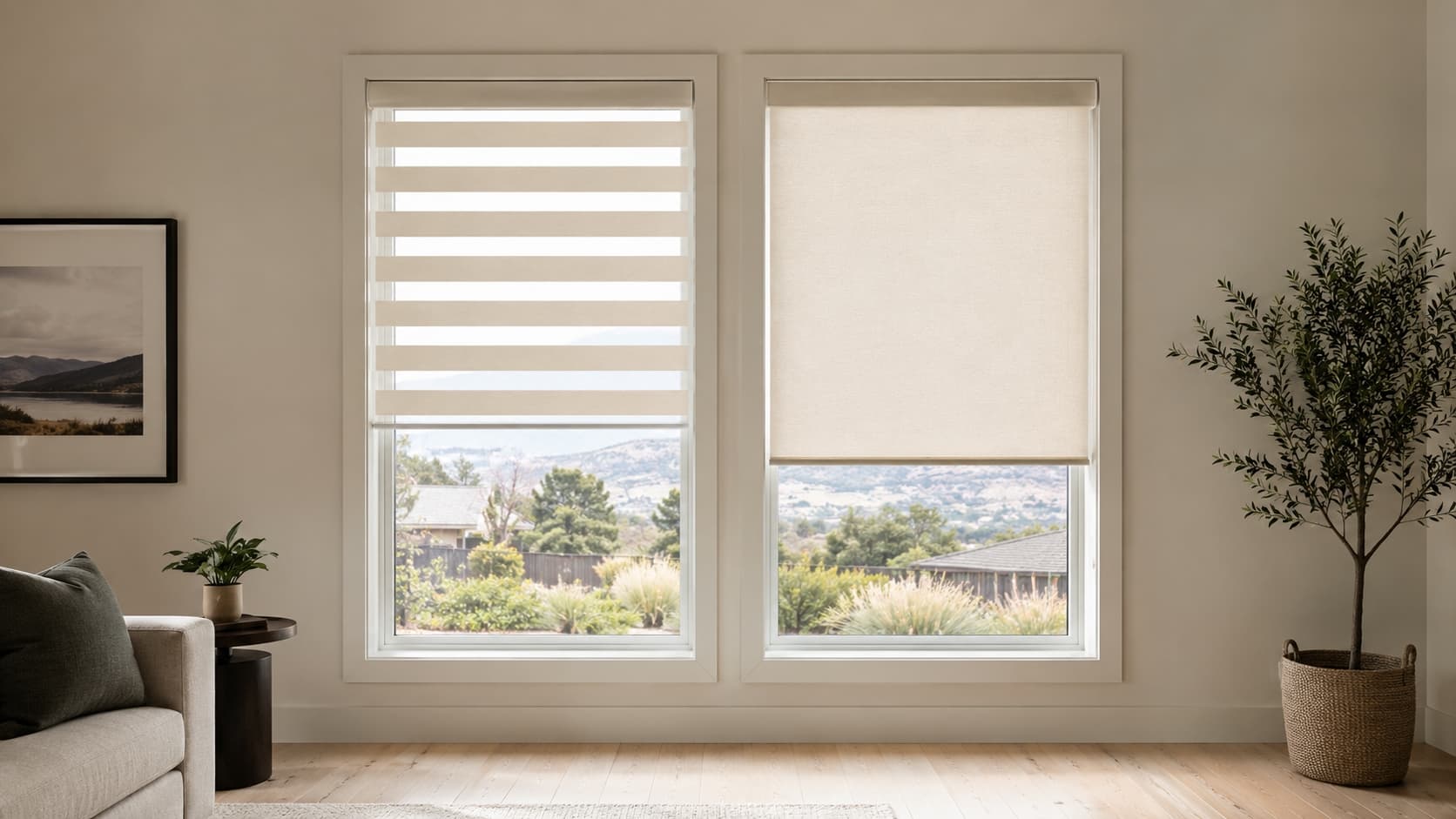
Zebra Blinds vs Roller Shades: Which Is Right for Your Home?
They look alike but solve different problems. A straight comparison of light control, privacy, cost, and looks to help you choose with confidence.
Product comparisons
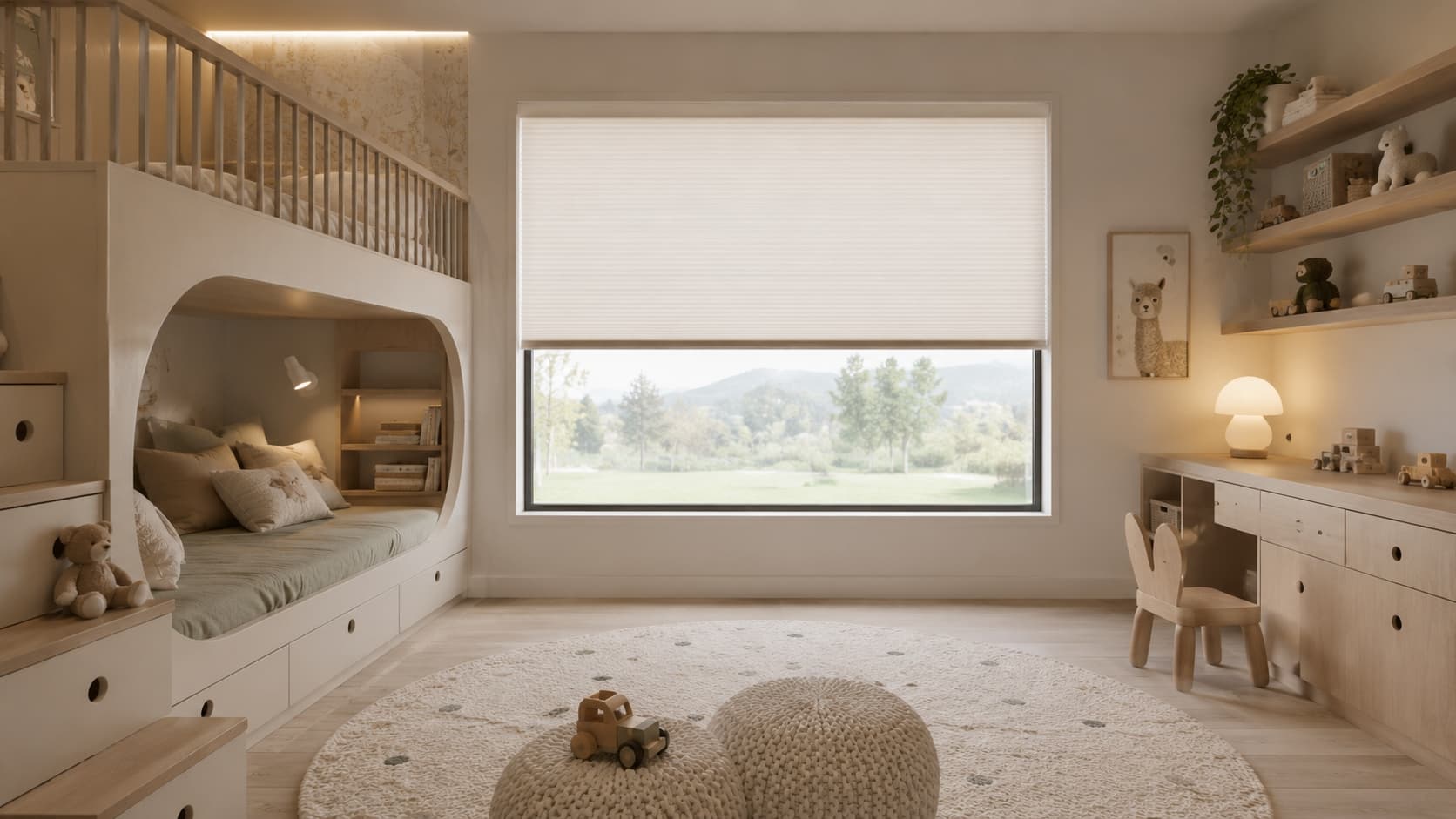
Are Your Blinds Safe? Canada's Cord Rules, Explained
Canada's window-covering cord rules changed to protect kids and pets. What the rules mean, how to spot a hazard, and the safest blind options for your home.
Safety & education